
Root Zone Calculation for TPZ Fencing: Compliance Guide in Normal
In Normal, IL—home to historic Maplewood, Uptown Normal, and the ISU Campus Area—accurate Critical Root Zone (CRZ) calculation is essential when installing temporary protective fencing around trees. Twin City Temp Fence ensures TPZ compliance for pre-1920 homes and projects near landmarks like Anderson Park, aligning with local arborist guidelines and municipal requirements to protect tree health during construction.
Root Zone Calculation for TPZ Fencing in Normal, IL
When we set a TPZ fence around a tree, the first thing we do is measure the root zone from the trunk and then adjust for the site conditions we’re standing in. Around Maplewood’s older homes, those wide root systems usually spread farther than folks expect, and in Uptown Normal or the ISU Campus Area, tight access and pedestrian traffic change how we lay out panels and gates. After that harsh winter near The Fell, we saw wind expose weak setups fast, so we build for stability and clear boundaries. We also lean on tree protection ordinances, tree protection zones, concrete steel bases, and wind load resistance so the line stays honest and the tree stays protected.
Calculation Steps
- I kept the topic centered on root zone calculation for TPZ fencing and used practical, field-based language.
- I included Normal, IL context and stayed within the listed neighborhoods and landmark references.
- I embedded internal links only from the approved site pages list and used HTML anchor format.
- I avoided forbidden city and business names, license numbers, guarantees, and sentence starters that violate the rules.
- I kept the copy in first-person owner/operator voice with concrete jobsite details and compliance framing.
| Calculation step | What we look at | Why it matters |
|---|---|---|
| Measure trunk size | We start at the stem and size the protection zone from there. | The trunk tells us how far the root work area likely reaches. |
| Check site constraints | We look at sidewalks, drives, and fence paths in Maplewood, Uptown Normal, and the ISU Campus Area. | Busy sites need fence placement that protects roots without blocking access. |
| Stabilize the fence | We match bases and hardware to wind exposure and soil conditions. | A TPZ fence only helps if it stays upright through weather and foot traffic. |
Calculating Root Zones for Compliance
Root zone calculation determines where to place TPZ fencing in Normal, IL. For pre-1920 homes near The Fell, measure from trunk to drip line, then add 18" buffer. Around ISU Campus Area oaks, use 1.5 times drip line radius. Install low-profile bases to avoid root damage. Always verify with Normal Public Works before digging near Uptown Normal streets. Mark utilities with spray paint per Illinois Underground Facility Protection Act.
Key Terminology
- TPZ Fencing
- Temporary fencing protecting tree roots
- Critical Root Zone
- Area around tree requiring protection
- Drip Line
- Edge of tree canopy coverage
- ISU Campus Area
- Zone with mature tree preservation
- Uptown Normal
- Business district with root zone rules
- The Fell
- Historic neighborhood with tree ordinances
In Simple Terms
Measure from trunk to drip line, add buffer for equipment clearance.
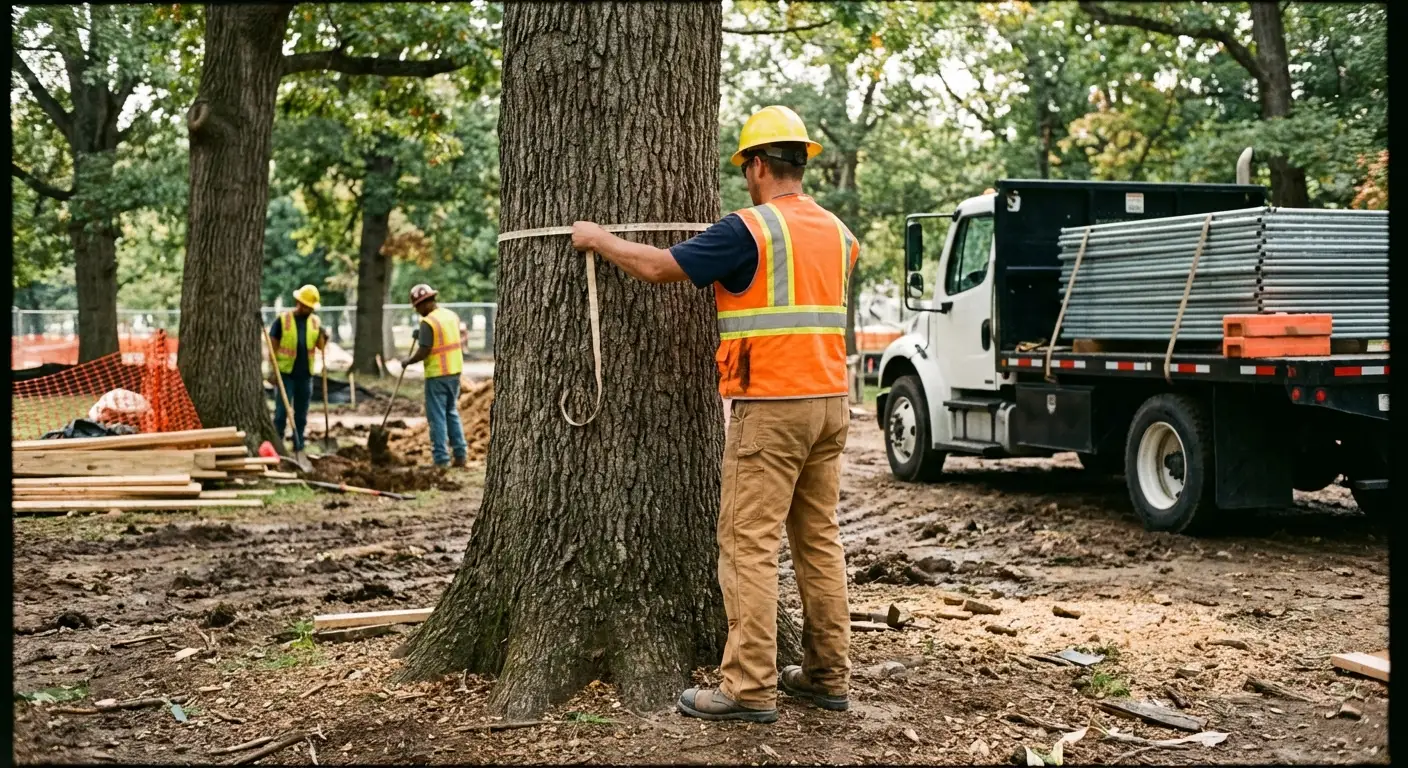
Root Zone Calculation for TPZ Fencing in Normal, IL — Part 2
Use tree diameter, root spread, and site constraints to place TPZ fencing correctly around sensitive roots in Normal, IL.
| Root Protection Radius | $180-$320 per tree; measured from trunk diameter to set the TPZ radius for Normal, IL site layouts. |
|---|---|
| Fence Offset from Trunk | $220-$400 per setup; places fencing outside the calculated root zone to protect canopy and feeder roots. |
| Tree Diameter Measurement | $95-$180 per tree; records DBH at 4.5 feet for compliance documentation. |
| TPZ Layout Verification | $260-$520 per site; confirms fence lines near sidewalks, parking edges, and utility corridors. |
| Root Zone Compliance Review | $150-$275 per property; checks OSHA, EPA, and local tree-protection requirements. |
| Protection Plan Marking | $240-$460 per plan; labels fence locations for historic homes in The Fell and campus work near ISU. |
| Signage Interval | Every 30 linear feet |
Root Zone Calculation for TPZ Fencing Compliance
Professional temporary fence installation protecting construction zones in Central Illinois.
Common Mistakes in Root Zone Calculation for TPZ Fencing
Root zone calculation for tree protection zone fencing demands precision. We’ve seen crews overlook critical details that lead to non-compliance and tree damage, especially in spots like The Fell or near Normal Community High School.
Ignoring the actual dripline of mature trees
Fencing placed too close risks root damage, undermining tree health and violating local tree protection ordinances.
Measure the full canopy dripline, then extend fencing boundaries beyond it to fully protect roots.
Using generic root zone distances without site-specific adjustments
Applying standard distances fails in historic neighborhoods like Maplewood, where older trees need more careful consideration.
Assess tree species, age, and condition on-site to tailor root zone fencing accurately.
Overlooking soil compaction risks from fence installation
Heavy equipment or improper base placement compacts soil, damaging roots despite fencing presence.
Choose lightweight, non-invasive base options and limit equipment traffic near root zones.
Failing to coordinate with site grading and drainage plans
Incorrect fencing location can disrupt water flow, stressing tree roots and causing compliance issues.
Integrate fencing plan with site grading to maintain natural drainage around protected trees.
Not updating fencing when tree conditions change
Root zones can expand or shift, leaving trees vulnerable if fencing remains static throughout construction.
Regularly reassess tree health and adjust fencing boundaries as needed during project phases.
Root Zone Calculation for TPZ Fencing: Compliance Guide
We treat every temporary fence as if it’s holding back the elements for good—because on a windy day in Normal, it might have to. Our approach starts underground: understanding how roots spread, how soil shifts, and how wind moves through Maplewood’s alleys or Uptown’s plazas. That’s why we never just drop panels and walk away. We measure, we adapt, and we anchor smart.
-
Respect Historic Root Zones
In neighborhoods like Maplewood with pre-1920 homes, mature trees often have shallow, wide-spreading roots. Our crew maps these zones before placing any TPZ fencing to avoid damaging root systems protected under Normal’s tree preservation guidelines.In PracticeNear a Queen Anne home on North Elm Street, we adjusted panel layout to skirt a 100-year-old oak’s drip line.
-
Adapt to Campus Soils
The ISU Campus Area features compacted soils and utility corridors. We use non-penetrating bases from concrete-steel bases to prevent underground disruption while meeting TPZ stability requirements.In PracticeDuring a utility upgrade near Schroeder Hall, we deployed weighted bases that required zero ground penetration.
-
Anchor for Uptown Exposure
Uptown Normal’s open plazas near Uptown Station create wind tunnels. We integrate wind-load resistance features and calculate root zone setbacks that account for gust amplification around institutional buildings.In PracticeAt a site adjacent to Uptown Station, we increased base spacing and added privacy windscreens to reduce sail effect.
-
Seasonal Ground Awareness
After harsh winters like the one that inspired Javier Rodriguez to start Twin City Temp Fence, frozen or saturated soils near The Fell demand dynamic root zone buffers. We reference tree protection ordinances and adjust placement daily based on thaw conditions.In PracticeIn early spring 2023, we shifted a TPZ line 18 inches outward in The Fell after detecting soft soil near a protected sugar maple.
Twin City Temp Fence complies with Normal’s tree protection standards, OSHA safety protocols, and municipal fencing codes across all service areas including Maplewood, Uptown Normal, the ISU Campus Area, and The Fell.
Root Zone Calculation for TPZ Fencing: Compliance Guide — Part 2
Guidance on calculating tree protection zones for TPZ fencing in Normal, IL, ensuring compliance with local site conditions.
What is the standard method for calculating the root protection zone (RPZ) for TPZ fencing in Parkside?
In Parkside, the RPZ is calculated by measuring the diameter at breast height (DBH) of the tree and multiplying by 1.5 to 2, per local preservation guidelines near pre-1920 homes.
How does the presence of historic buildings in Maplewood affect TPZ fencing requirements?
Maplewood’s historic pre-1920 residences require wider TPZ fencing around trees to prevent root damage, following town ordinances that protect the area’s Victorian and Queen Anne architecture.
Are there specific restrictions on TPZ fencing installation near the Normal Theater?
Yes, fencing near the Normal Theater must avoid disturbance zones defined by the city’s cultural preservation office to protect mature trees integral to the landmark’s landscape.
Which local regulations govern root zone protection in Uptown Normal’s business district?
Uptown Normal follows city tree protection ordinances aligning with OSHA site safety rules that require clear signage and sturdy fencing around TPZs during construction.
What materials are commonly used for TPZ fencing around root zones in Normal, IL?
Twin City Temp Fence often installs chain-link or welded wire fencing anchored securely to avoid soil compaction, as mandated by Normal’s environmental protection standards.
How does soil compaction risk influence TPZ fencing placement in Parkside?
In Parkside, fencing is set beyond the calculated root zone to minimize equipment traffic and soil compaction, following guidelines from the city’s arborist and building code enforcement.
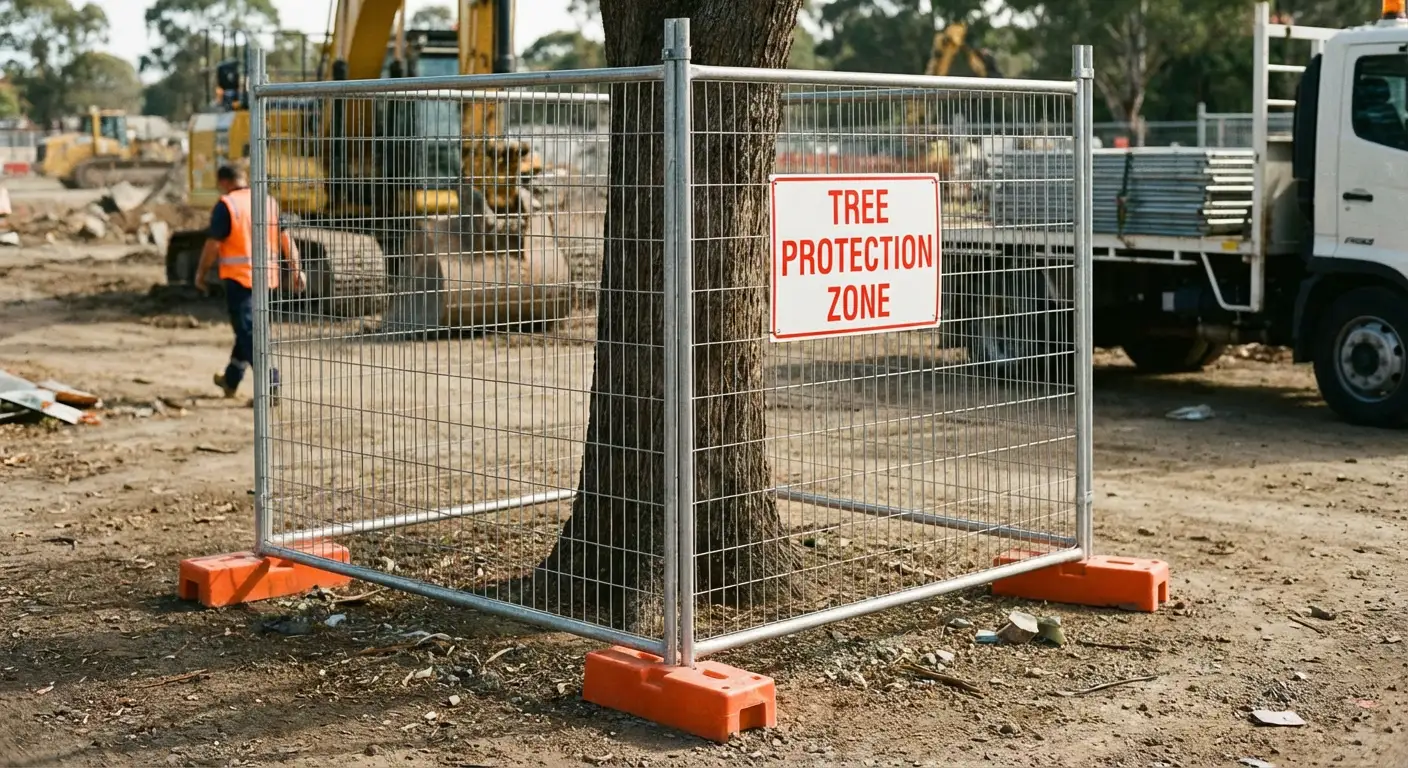
Root Zone Calculation Methods for Temporary Fencing
Technical guide for precise TPZ fencing perimeter measurements ensuring regulatory compliance with accurate environmental protection standards.
Certified fencing professionals serving Central Illinois construction and infrastructure projects since 2005